
A Trumpian turn in UK green industrial policy is bad news for renewables
Published June 2026
« British Steel for British Turbines »? Not anytime soon says Everoze Partner Benjamin Lock in his latest article « A Trumpian turn in UK green industrial policy is bad news for renewables ». Renewable supply chains are about to take a hit in a misguided pursuit of Trump-style protectionism. Here’s what the Steel Strategy and UK CBAM mean for UK projects.
The UK CBAM and Steel Strategy will come into force in the coming months. How will these two fundamentally protectionist measures – presented as green policy – impact a struggling UK clean energy sector, and will they deliver the environmental benefits promised?
Two fresh policy instruments are coming to the UK over the next six months. The new UK Steel Strategy will be the first to take effect, imposing higher tariffs and reduced quotas for imports of many types of steel from 1 July. The UK CBAM will follow at the start of 2027, adding a carbon price levy on imports of iron, steel, aluminium, cement, fertilisers and hydrogen.
Neither policy was announced in all caps on a niche social media platform. Yet they follow the protectionist trend modelled by Trump’s US and mirrored by governments worldwide. Fundamentally, both measures are designed to increase the competitiveness of UK-based manufacturing capacity relative to low-cost oversees production. A ‘British steel for British turbines’ kind of thing. How will they work?
The UK CBAM has the same objective but a narrower scope than it’s EU equivalent (introduced in 2023). It will work by applying a carbon price on imported goods in defined categories to reflect the shortfall between the carbon price paid in the country of manufacture (often zero) and the price that would be paid if it were manufactured in the UK. There’s logic here – what use are sound environmental policies if they can be so easily sidestepped? The argument is that the knock-on impacts will persuade foreign manufacturers to clean up their operations in order to secure UK trade.
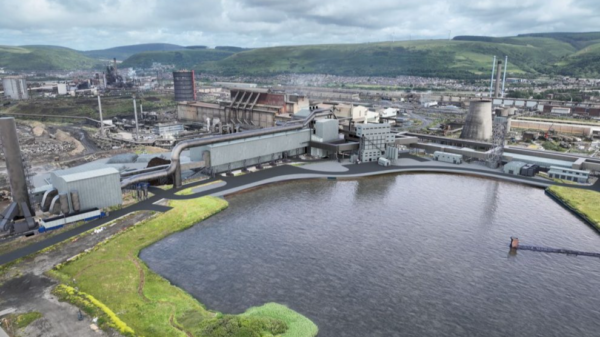
The Steel Strategy deploys a blunter mechanism: a 50% tariff on imported steel above the quarterly quota, which will be reduced ~60% from current levels. The reasoning is to stabilise and protect domestic production, enticing the investment required for a transition to ‘green’ steel produced by electric arc furnaces. The new tariffs will apply from 1 July 2026 – next month. Meanwhile, domestic production has fallen around 40% as blast furnaces close in preparation for EAF production which isn’t expected to ramp up for several years.
Despite the critiques that have been levelled at these measures (and there are many: weak EU integration, huge administrative burden, patchy scope) they do look set up to achieve their stated goals: reducing carbon leakage in the value chain and increasing the competitiveness of UK manufacturing.
However, these achievements will feed through to UK renewables and other industries reliant on steel and other materials in scope of the CBAM in one way: cost. Most materials, especially energy-intensive ones like steel, are expensive to produce in the UK. UK energy costs are four times higher than in the US for a start (if you’re even lucky enough to get a grid connection). Neither policy is trying to make UK production cheaper. Instead, imports will be made more expensive.
Thankfully, most finished products are out of scope. PV modules, turbine gearboxes and generators, inverters and other electrical components manufactured outside the UK will be safe from the CBAM when it kicks in. However, PV structures & piles, turbine tower sections, offshore foundations and other steel and aluminium parts look likely to be hit hard. And mere weeks away from the first changes coming into force, there’s still uncertainty around certain key details of implementation.
Forward thinking developers and EPCs are already thinking about strategies to minimise short term effects. Advance orders of impact-linked components, timing imports to maximise quota acceptance, even offshoring more manufacturing steps to classify imports as tariff-avoiding ‘finished products’ are some of the options on the table.
But you’ll need a heavy tint on those rose-tinted glasses to see the positives here. Maybe we will see direct investment into UK low carbon manufacturing that gradually reduces costs and reduces dependency on imports. Clearly that isn’t going to happen anytime soon. For now, the UK renewables industry will face higher costs and tighter margins under a model the UK once criticised: protectionism first, (dubious) climate benefits second.


