
Cannibalisation, Climate and Constraints: Why Hybridisation Is Moving Behind the Meter
Published June 2026
Battery storage has a habit of proving the sceptics wrong. In this new article, Joe Phillips argues that behind-the-meter hybridisation could be the next important step in the evolution of BESS. As renewable asset owners face declining capture rates, increasing system constraints and growing demand for flexibility, Joe explores why actively managing generation is becoming a commercial necessity rather than an optional extra.
Over the last 12 months we’ve seen an uptick in queries from our clients about the retrofitting of BESS on existing wind and solar assets. But the pattern emerging points to something much bigger.
Since I worked on the UK’s first Enhanced Frequency Response (EFR) auction back in 2016, we’ve witnessed BESS going from strength to strength across Europe. Costs have tumbled, operational capabilities have increased and business models have evolved into new markets. The technology has rapidly become the Swiss Army knife of electricity.
Time after time, just as the doom-mongers predicted the next market saturation and deployment cliff-edge, the BESS sector has confounded the sceptics – finding new ways to add flexibility and value.
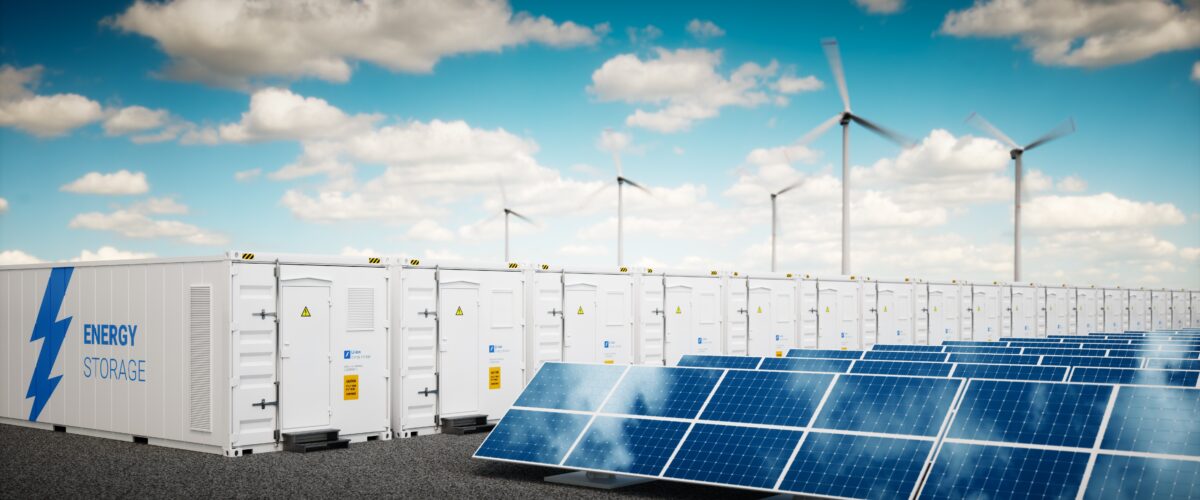
Now, we’re seeing the start of the next chapter in the battery story: Behind the Meter (BtM) hybridization. Three Cs are driving this.
.
Cannibalisation
The decline in capture rates for renewables is already well documented, particularly for solar assets in high saturation markets like Spain and Germany. This is hitting project returns hard with institutional owners exposed to significant dips in NAV for funds with large exposure to these markets. Hard questions are being asked of fund managers about how far capture prices could fall and what can realistically be done to mitigate it.
.
Climate
As most Europeans are witnessing right now climate change is driving more frequent extreme weather events. This can cause disruption to infrastructure and dangers to human health across society, but there are specific challenges for the electricity sector as renewables capacity ramps up. When periods of low wind combine with extreme heat in summer or extreme cold in winter, it can be a struggle for the system to cover evening demand peaks. The value of technologies like BESS, which can maintain system reliability for these periods, is only increasing with time. This is increasing the value of flexibility not just at system level, but at the asset level, particularly for projects able to control when and how they export.
.
Constraints
As anyone working as a developer in the sector will attest, securing new grid connections in a commercially viable timeframe is becoming increasingly challenging in many markets, as infrastructure build-out lags system demand. For existing renewables assets, this is translating into rising constraint volumes. Even where curtailment is formally compensated, asset owners are increasingly exposed to the downstream impacts which are not compensated via reduced flexibility, lower capture prices and lost trading opportunities.
.
In the course of our transaction advisory work, we see many projects pricing these factors in as assets are acquired. But with a myriad of uncertain inputs based on complex modelling from grid, technical and market advisors, investors are always going to struggle to get the projections right. Sidebar: we’re looking at how to improve the integration of advisors work in financial models during due diligence as it seems that risks and upsides aren’t being captured simply due to ineffective interfaces between parallel advisory teams.
The three Cs are forcing asset owners to move beyond passive generation and actively manage how and when their assets interact with the grid. Behind-the-meter hybridisation is emerging as a practical route to do this, not just opening new revenue streams but recovering value that would otherwise be stranded. It also unlocks the hidden value of existing grid connections and landowner relationships.
This all sounds great, but of course there’s several barriers to get over to turn hybridisation from opportunity into execution. Perhaps the biggest two of these are grid regulation and the business case. And to make matters more complex, they are interrelated.
Regulators and system operators are beginning to respond, albeit in different ways. In Germany, recent reforms such as Flexible Connection Agreements explicitly allow assets to connect on a non‑firm basis, enabling co‑located generation and storage to share constrained capacity. Ireland is introducing export capacity sharing to allow hybrid projects behind a single connection point even if roll-out is a couple of years away. In Great Britain, the shift is less explicit but no less important: connections reform and queue management are elevating the value of existing grid access, while encouraging more efficient use of scarce capacity. Taken together, these changes point in a clear direction of travel away from rigid, asset-by-asset access rights, and towards more flexible, shared and optimised use of existing connections.
In all cases, expect a raft of system studies to be need for ensuring grid code compliance. For some assets, this will lead to a requirement for extra kit, like reactive compensation, to ensure system security. Acceptability to the system operators and DNOs will be driven by the proposed operating concept. The more complex the proposal, the more scrutiny it will come under and the higher the risk of a drawn-out process even if ultimately, the scheme is grid-supportive.
Working against this is need to make the numbers stack up. In hybrid configurations, BESS has the best prospects of meeting hurdle rates if it can generate multiple revenue streams such as hybrid-dispatch alongside active participation in energy, balancing and ancillary markets.
So for now, while grid regulation and codes are catching up with the technical opportunity BtM hybridization offers, asset owners will have to come forward with proposals which balance economics and operational complexity with regulatory acceptability.
Hybridisation will not be the right answer for every asset, but standing still is increasingly not an option. As market, system and infrastructure pressures ramp-up, value will be realised by those who can actively shape their output rather than simply produce it. The challenge now is in translating a compelling concept into a configuration that is technically viable, regulatorily acceptable and commercially viable. This starts with a properly integrated analysis which brings together market, grid and technical perspectives which are too often assessed in isolation.


